
When it comes to tactful writing in business, two small words can cause an impressive amount of trouble. You’ve read the title of this article, so you’ve probably guessed… They’re “No” and “Sorry”.
“No” can come out too hard and too fast. “Sorry” can arrive under six layers of corporate bubble wrap, with an actual apology nowhere to be seen.
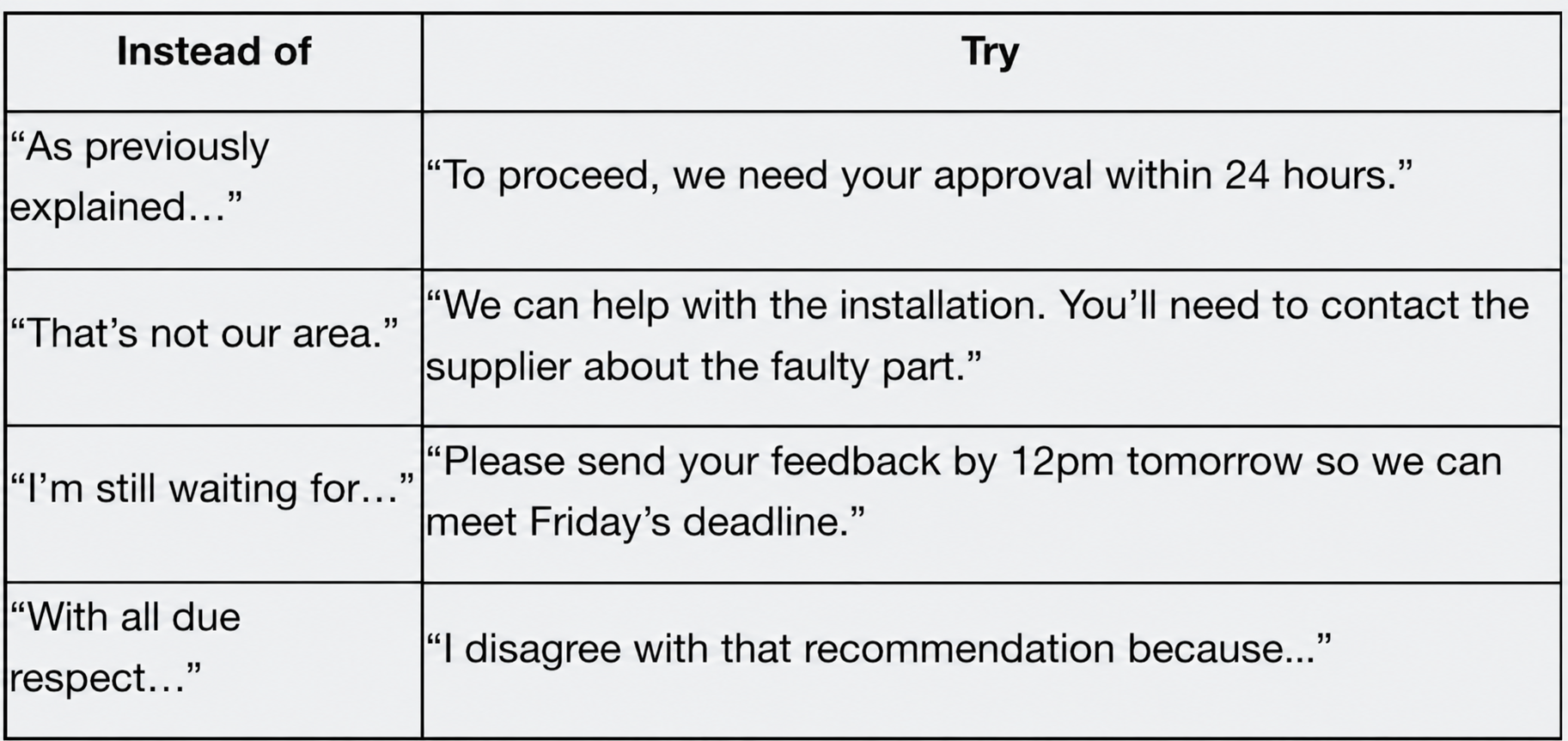
In business communication, we’re taught to reach for sensitive, diplomatic, tactful writing. A solid strategy. But this can (and frequently does) yield text that’s so vague, no-one can work out what we mean.
TACTFUL WRITING: LET’S START WITH NO
Imagine a colleague asks you to send a client document to their personal email address so that they can work on it at home. In this example, company policy prohibits this sort of thing and an approved remote-access option exists.
You could write, “No. You know that’s against policy.” It’s efficient, but abrupt.
You could write, “I’m so so sorry but unfortunately I don’t think I’ll be able to do that. I really wish I could help. Please accept my apologies.” That’s way too much remorse for simply protecting a client document, if you ask me.
My suggestion for tactful writing? “I can’t send client documents to personal email addresses. You can access the document through the approved remote-access system to work on it at home.” In this case, the answer is clear and the colleague has a way forward.
Before drafting a refusal, work out what you’re refusing. Is the request prohibited or would you just prefer not to do it? If it’s a genuine requirement, say so. If it’s your preference, own it. (“Company policy” cannot take the blame for everything.)
A little more runway
Some refusals do need context. For this, I like to use BEBE:
Buffer, Explanation, Bad news and Exit.
I know, I know. It sounds like someone’s tiny expensive dog. Stay with me…
Buffer: Neutrally acknowledge the request.
“Thanks for asking whether we can include the extra pages in your website project.”
No extravagant praise.
Explanation: Give the relevant reason in plain language.
“The quote covers five pages. The additional pages will need more writing and design time.”
Bad news: State the refusal.
“So we can’t include those pages at the original price.”
Exit: Offer a workable next step.
“I can quote for the additional pages or we can keep to the five-page website we agreed on.”
Only offer options you’re willing and able to deliver. Don’t offer “perhaps” as a consolation prize when the answer is definitely “No”.
Remove the elbows
You can be technically polite while poking someone in the ribs.
TACTFUL WRITING: HOW TO SAY SORRY
Let’s say that your company has made an invoicing mistake and the client has complained. You’ve replied. The client opens your email and finds:
“At TMWT, we pride ourselves on our unwavering commitment to customer service…”
Fab. But their invoice is still wrong.
The reader should not have to scroll past your values to find the apology. Just start your response with, “I’m sorry we sent you the wrong invoice.” You can build your tactful writing from there.
Be specific and objective
“We apologise for any inconvenience caused” leaves quite a lot unnamed. What happened? Be specific, like so: “I’m sorry we sent you the wrong invoice. You’ve had to contact us twice to get it corrected.”
Here you’ve defined the error and acknowledged the extra work it created. (If you don’t know the impact, don’t invent it. No waffly “You must be furious…”)
Don’t build an ‘escape hatch’ into your apology, like so: “I’m sorry if we sent the wrong version.” If you know you sent the wrong version, remove the “if”.
Here’s another baddie: “I’m sorry you feel we let you down.” This apologises for the person’s reaction, but not for the fact that you missed an agreed deadline.
You can give a relevant explanation after the apology. Keep it factual. Don’t speculate about the cause — or shift all the blame onto another team.
Give the apology a job
A really useful apology tells the person what happens next: “I’m sorry we sent you the wrong invoice. You’ve had to contact us twice to get it corrected. I’ll send the corrected invoice by 2pm today and confirm when the original has been cancelled.”
This gives the reader a defined action and a time.
But what if you don’t know? “I’ll look into it” may be a start, but it’s not a great place to stop. Say what you’re checking and when you’ll report back:
“I’m sorry your payment hasn’t appeared in your account. I’ve referred this to our payments team. I don’t yet have a confirmed resolution time but I’ll update you by 3pm tomorrow, even if the investigation is still in progress.”
Only say you’ve referred it if you have. Only promise the update if you can send it…and then send it. Even if the news is that there’s no news.
“Sorry, but (still) no…”
An apology doesn’t require you to grant the person’s next request. You can be sorry and still decline.
Let’s say you delivered a project late and the client now wants extra work at no charge. You write, “I’m sorry we missed the delivery date. This delayed your launch and we should have warned you sooner. The additional work you’ve requested needs a separate quote.”
You still need to address the missed deadline, of course. But you can take responsibility for that without agreeing to whatever comes next. The same applies in reverse: you don’t need to apologise every time you say “No”.
A final word on tactful writing: Before you hit Send, check whether your “No” leaves room for negotiation you don’t intend. Ensure that your “Sorry” names something you’re actually taking responsibility for. And delete “We trust the above is in order,” especially if you’re sorry because it wasn’t.